Victorian · 1910
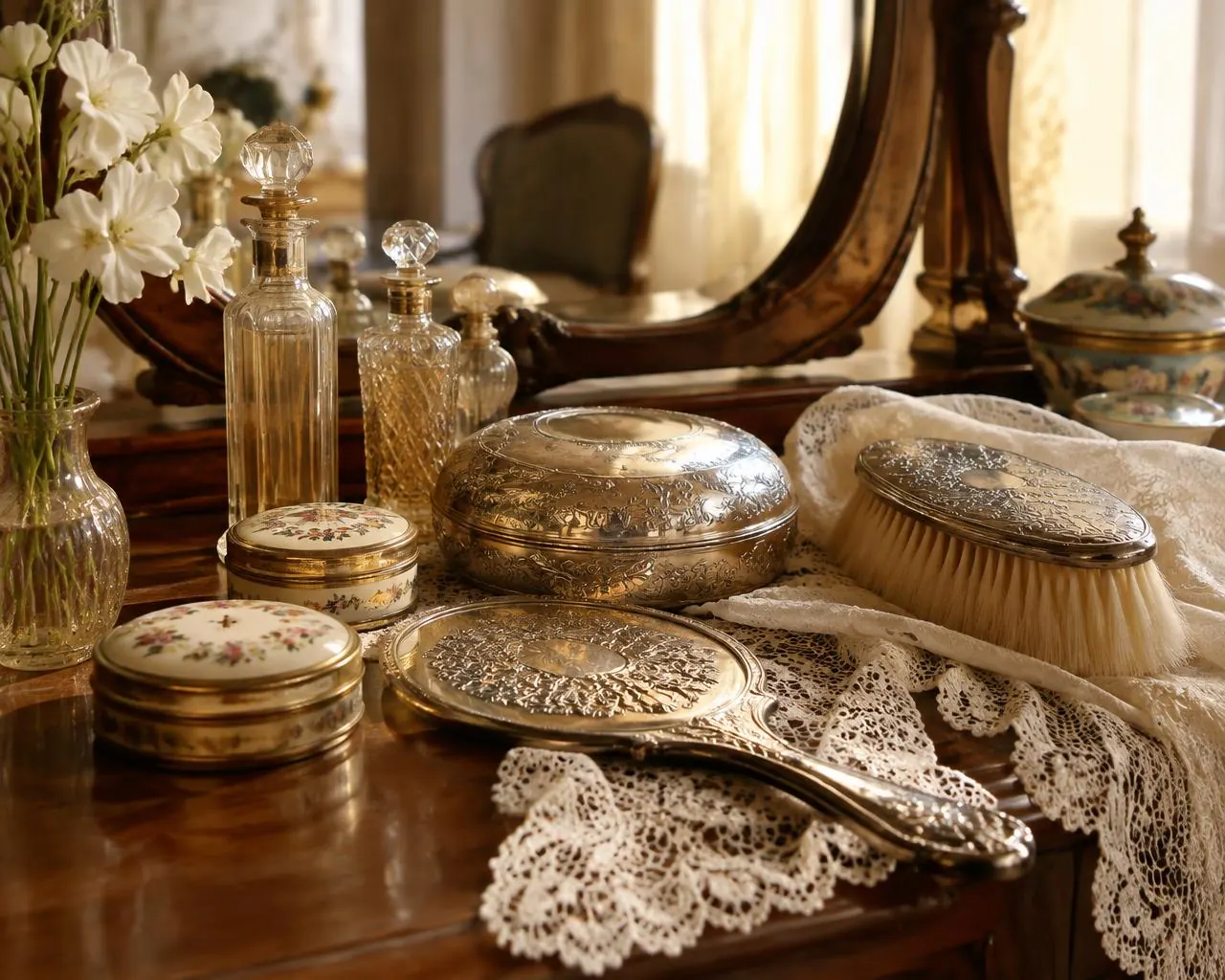
Dry shampoo in 1910: the powders of the pre-shower era
Before running hot water, clean hair came in a tin. Orris root, cornstarch and a stiff brush did the work.
Era 05 · 1837 – 1910
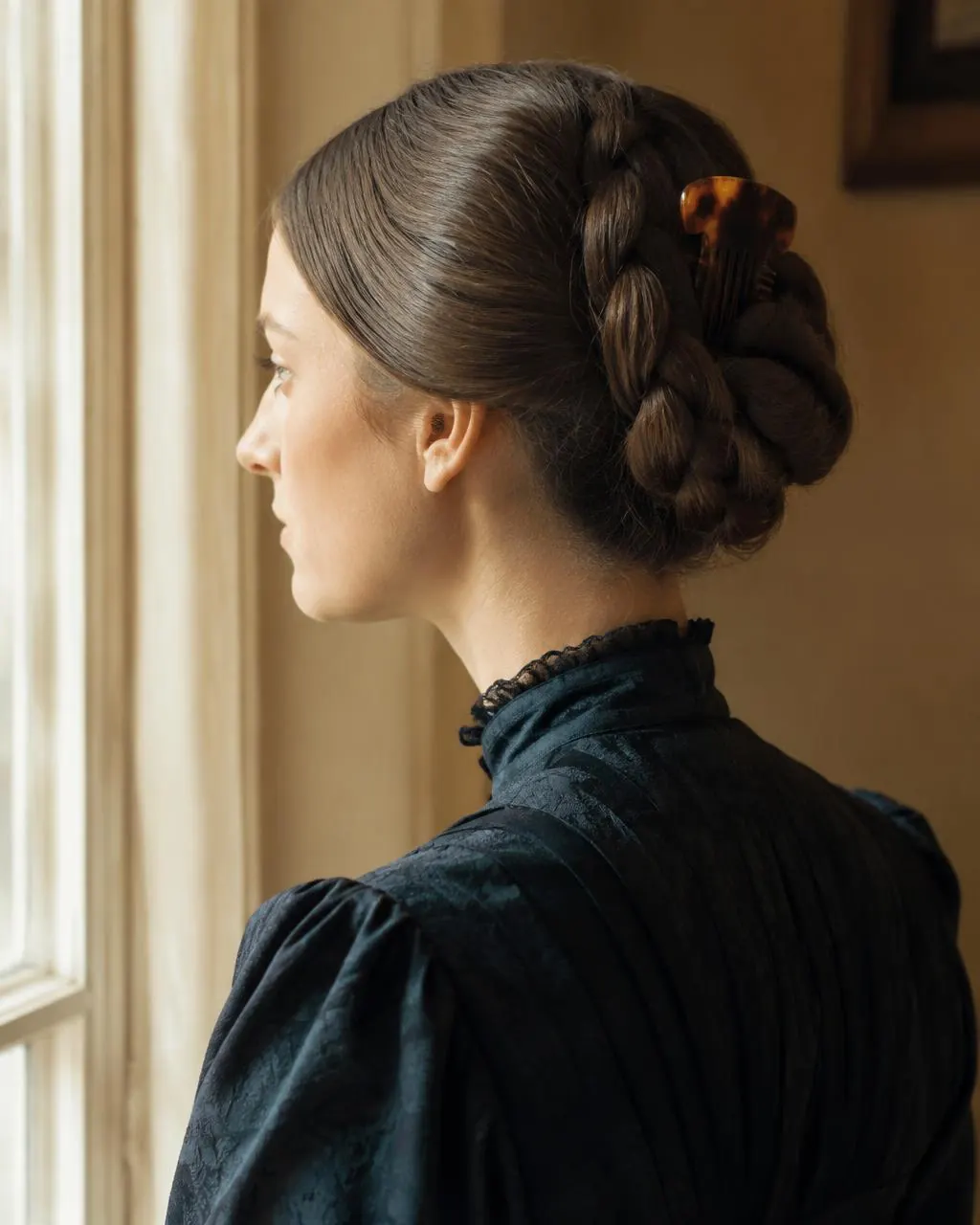
Centre partings, hair jewellery and the hair receiver.
Hair was smooth, centre-parted and coiled at the nape. Women saved combings in hair receivers to make padding, and wove the hair of the dead into mourning brooches. Bear's grease and macassar oil were sold in every chemist.
Cover image: AI-generated period-style interpretation for The History of Hair — not an archival photograph.
Victorian · 1910
Before running hot water, clean hair came in a tin. Orris root, cornstarch and a stiff brush did the work.
Pre-Trichology Foundations Certificate · Trichologist Academy
Know the hair behind the hairstyle.
For stylists, barbers and salon owners who want to understand what they see in the chair: the structure of the strand, the growth cycle and how the scalp behaves — so you can talk to clients with confidence and know when to refer.
An introductory certificate and a first step towards further study; it is not a clinical qualification.
Run a salon? Explore the T-Select salon pathway →
New stories are announced on Instagram. Follow @the_history_of_hair
The word once meant a massage, not a wash. It reached English through India, and Europe learned it in a seaside bathhouse in Brighton.
The spinning stripes outside a barbershop are an advertisement for a medical service most barbers stopped offering centuries ago.
The first hair dryer was not something you held. You sat under it, and it was connected to a stove.
The most famous name in hair history belongs to a woman whose own hair went the other way.