Era 01 · 3000 BCE – 500 CE
Antiquity: the age of wigs
Egyptian wigs, Greek fillets and Roman curling tongs.
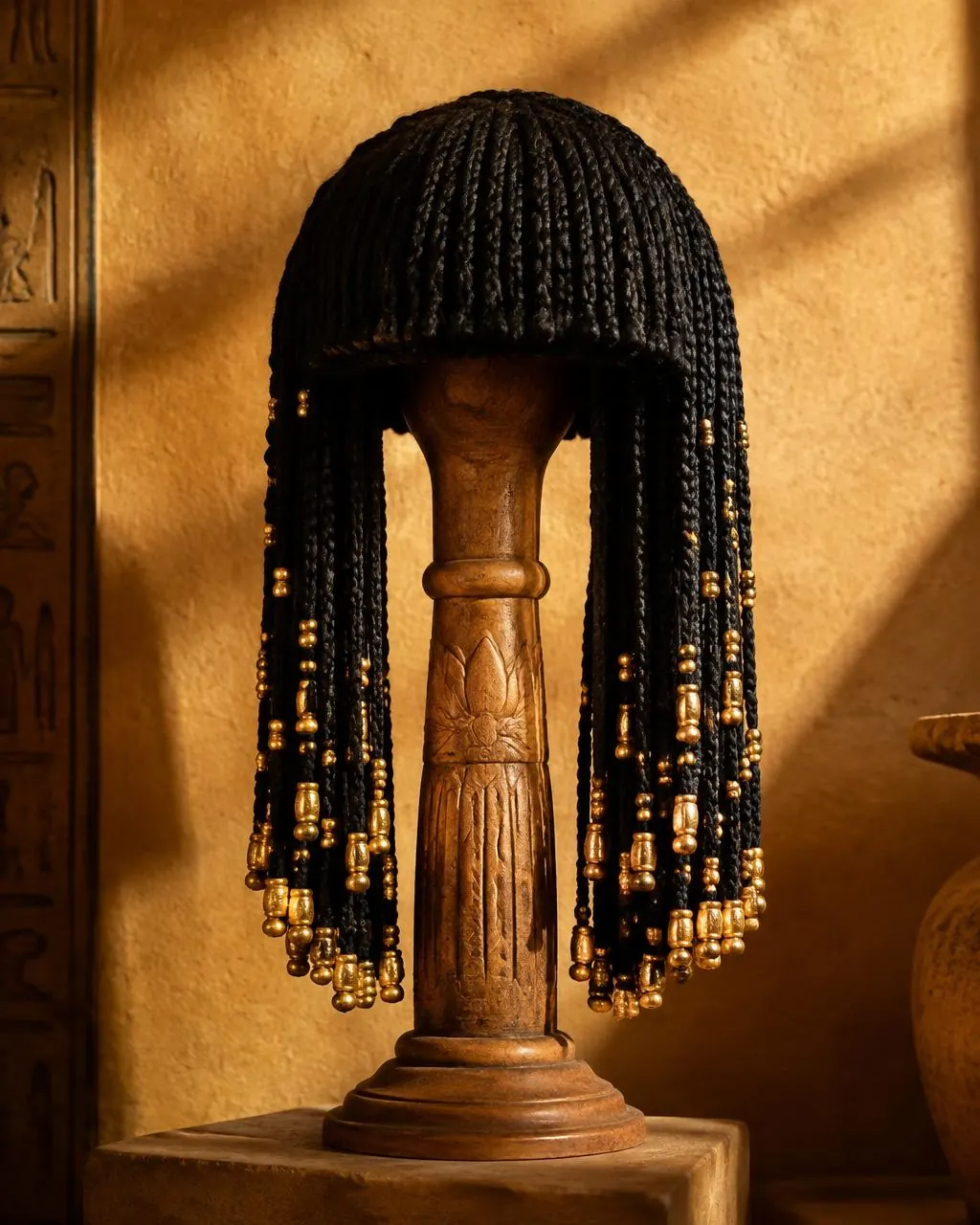
In Egypt, the wealthy shaved their heads and wore wigs of human hair and plant fibre, set with beeswax. In Greece, hair was bound with ribbons and fillets. In Rome, slaves called ornatrices heated iron rods called calamistra over coals to build towering curls for patrician women.
Highlights
- Egyptian wigs set with beeswax
- Roman calamistrum curling irons
- Greek fillets and krobylos knots
Cover image: AI-generated still life for The History of Hair — not a museum object.
Pre-Trichology Foundations Certificate · Trichologist Academy
Know the hair behind the hairstyle.
You know hair. Discover the science beneath it.
For stylists, barbers and salon owners who want to understand what they see in the chair: the structure of the strand, the growth cycle and how the scalp behaves — so you can talk to clients with confidence and know when to refer.
An introductory certificate and a first step towards further study; it is not a clinical qualification.
Run a salon? Explore the T-Select salon pathway →
New stories are announced on Instagram. Follow @the_history_of_hair
Go deeper
The History of the Mohawk
Its name comes from a 1939 Hollywood film. The haircut itself was being held up with imported hair gel more than two thousand years ago.
The History of the Mullet
Business in the front, party in the back is a 1990s joke. The haircut itself is roughly three thousand years older.
The History of Trichology
For most of history, hair loss was treated with hope and ointments. The science of hair is barely a century old.